.png)
From Charlottesville to Danville, Virginia Gas and Grocery Prices Are Still Paying for the Iran War

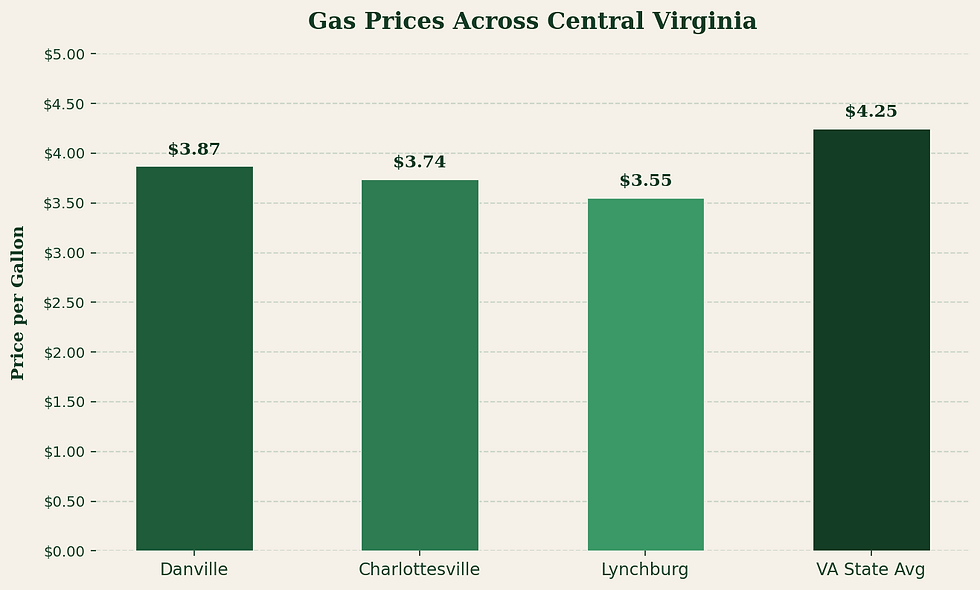
A war in the Middle East is one of those things that can feel abstract — something on the news, somewhere far away. But it's at every gas station in central Virginia right now, built into every dollar above $2.98.
A War in the Middle East, a Higher Bill in Central Virginia
The connection runs through the Strait of Hormuz. That's the narrow channel at the mouth of the Persian Gulf — roughly 21 miles wide at its tightest point — where about one in five barrels of the world's traded oil passes through every day. When the U.S.-Israel war with Iran broke out, Iran's position at that chokepoint suddenly mattered to every oil market on the planet. Crude pushed past $100/barrel as traders priced in the risk, and the national average of $2.98/gallon that Virginians had been paying vanished quickly.
Today, Charlottesville sits at around $3.74/gallon, Lynchburg near $3.54–$3.56, and Danville around $3.87. All below the Virginia statewide average — but still $10–$12 more per tank than before the conflict started. Fill up weekly and that's over $40 more a month that wasn't going to gas before.
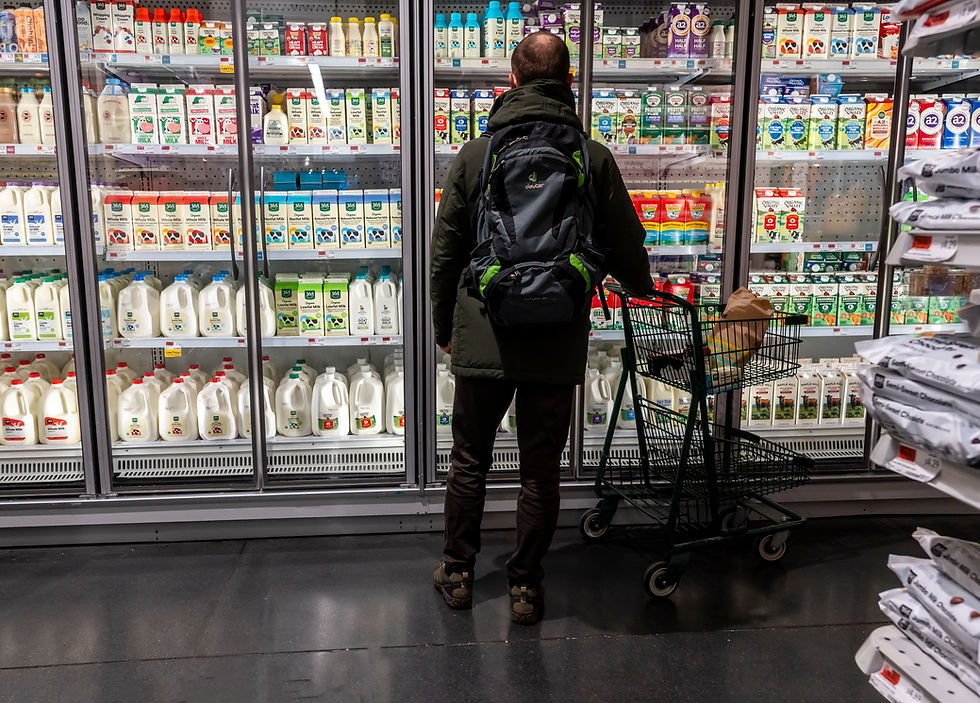
Rising Fuel Costs Have Made Groceries More Expensive Too
In Charlottesville and Lynchburg, families count on Kroger and Food Lion. In Danville, it's mostly Food Lion and Walmart — Walmart being the better bet for households watching the budget closely. Across all three cities, the prices reflect the same underlying pressure: ground beef is $6.90/lb, milk is around $3.68/gallon, and eggs are $3.93/dozen. Food doesn't move from farm to shelf on its own — it travels by truck, gets warehoused, gets refrigerated, and all of that runs on energy. When oil is expensive, the entire supply chain costs more, and the war's impact on oil shows up at the register just as clearly as it does at the pump.
Danville has one of the lower costs of living in Virginia, which gives some families a bit more breathing room. But across this part of the state — where wages have often lagged and good-paying jobs aren't always easy to come by — a few extra dollars a week at the pump and the store adds up fast. By the end of the month, it's real money.
Tariffs Add Another Layer
The Iran war explains part of what's happening at the grocery store. Tariffs explain another part. The 25% tariffs applied to imports from Mexico and Canada hit produce aisles directly — tomatoes, avocados, peppers, and berries sold at Kroger and Food Lion largely move through supply chains that cross those borders. When the tariff adds cost at the border, it gets absorbed somewhere in the chain and eventually shows up in the price tag.
Steel and aluminum tariffs have driven up the cost of canned goods and packaged foods alongside that. Grocery retailers have acknowledged they're passing those costs along, and for families in Charlottesville, Lynchburg, and Danville, the result is a store that's more expensive than it used to be — for reasons that have nothing to do with oil.


