.png)
How AI Data Centers Are Reshaping Life for American Families

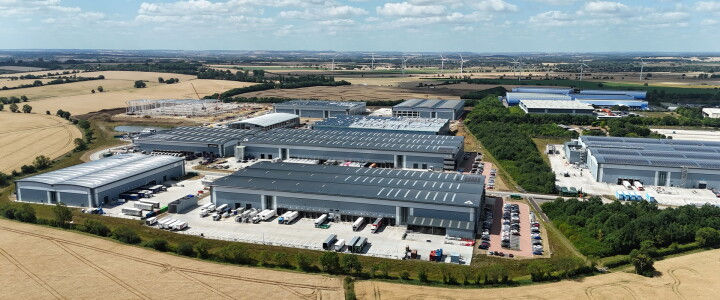
For a growing number of American families, daily life is being quietly disrupted by the rapid rise of AI data centers. Electric bills have doubled, sometimes tripled. Wells that ran clean for generations are sputtering. Children are losing sleep to a low, constant hum coming from a windowless building down the road.
These massive facilities — warehouses full of computer servers that power AI tools, cloud storage, and the apps on our phones — are being built across the country at a breathtaking pace. They bring promises of jobs and tax revenue, but they also leave a heavy footprint on the communities where they land. And for families already stretched thin by the cost of groceries, childcare, and healthcare, that footprint is starting to hit very close to home.
Electricity Bills Rising
Communities across the country are struggling with growing electricity bills due to the data centers. Across Northwest Indiana, families have reported bills doubling and tripling in the span of a year. In West Virginia, the owner of a small camping trailer park — long a refuge for folks living on the edge of poverty — was forced to raise rents from $350 to $400 a month because his own electric costs jumped so sharply. At least sixteen of his long-term residents had to leave. They simply could not afford to stay.
In Baltimore, a district court judge who hears rental disputes described what she sees every week from the bench. "It's utilities versus rent," she said. "They want to stay in their home, but they also want to keep their lights on."
This is the trade-off no parent should ever have to make.
According to the Environmental and Energy Study Institute, about 21 million American households — roughly one in six — are now behind on their utility bills. Total outstanding utility debt reached $25 billion in mid-2025. Utility shutoffs, which leave families without heat, air conditioning, or refrigeration, climbed to an estimated 4 million in 2025.
Why Are Bills Climbing So Fast?
Electricity prices have always shifted up and down. But something different is happening now. Bloomberg's analysis found that wholesale electricity costs near data centers have jumped as much as 267 percent over the past five years. Goldman Sachs analysts told their clients in February that families will not see relief from rising electricity prices anytime soon, as demand from AI data centers continues to outpace the slow growth of power supply.
Why does a data center one or two counties away show up on your bill? Because the electric grid is shared. When a single new facility plugs in and starts pulling as much power as a small city, utilities have to scramble to build new power plants, new transmission lines, and new infrastructure to keep up. Those costs get spread across all customers — including the young mother running a load of laundry at night and the retired couple keeping the heat low to stretch a fixed income.
When the Well Runs Dry
Electricity is only part of the story. Data centers also need staggering amounts of water to cool the servers inside. A single large data center can use up to 5 million gallons of water a day — about the same as a small town of 10,000 to 50,000 people.
In Newton County, Georgia, families living near a Meta data center have reported that their private wells were disrupted. They have been hauling water in jugs and replacing appliances clogged with sediment. A Google facility in The Dalles, Oregon — a small city of just 16,000 — consumed roughly a quarter of the city's entire water supply in a single year. In one Virginia community, a data center draws more than 20 million gallons of groundwater annually from local wells.
A new report from researchers at Santa Clara University found that AI companies are increasingly choosing to build their facilities in drier, more rural, and less affluent areas — communities that already struggle with fragile water systems, dry wells, and contaminated supplies. These are the very communities least equipped to absorb the loss.
The Hum That Never Stops
Then there is the noise.
In Brittany Heights, Arizona, a quiet residential neighborhood, residents began complaining of a constant low hum after a data center moved in nearby. Some have struggled to sleep. Others have moved away. In Virginia, families living near data centers have described their lives as "living in hell," citing the unending sound, the bright lights that never dim, and the worry over their children's health.
Researchers warn that the impact on children is real. Chronic noise exposure has been linked to poorer cognition, decreased learning, and lower reading comprehension in young children. A 2025 model projects that by 2030, pollution from U.S. data centers could cause approximately 600,000 cases of asthma symptoms and 1,300 premature deaths each year. Diesel backup generators — required at nearly every data center — emit pollutants linked to nearly 20,000 asthma cases annually and roughly $385 million in associated health costs. These burdens fall most heavily on lower-income neighborhoods.
For a child with asthma, the difference between a calm night and a trip to the emergency room can be measured in air quality. For a baby trying to sleep, it can be measured in decibels. These are the conditions under which our children are growing up.
A Future Worth Building
The decisions being made about AI data centers right now will shape the next chapter. Done thoughtfully, this technology could open new doors for our children. Done carelessly, it could close the door of opportunity for many of the very families who built this country.
We can do better than that. We can build a future that supports innovation and protects the home. We can welcome new industry and defend the dignity of the family on the next county road over. We can be neighbors in the truest, most ancient sense of the word — the kind described in the parable of the Good Samaritan, who stopped his own journey to care for the one in need.
When families thrive, communities thrive. When communities thrive, a nation thrives. May we have the wisdom, the courage, and the compassion to make sure that the lights staying on in distant server rooms do not come at the cost of the lights going out in American homes.


